What’s The Difference Between a Combi, System, or Regular Boiler?
When searching for the best boiler for your home, you will find there is a variety of types to choose from. Selecting the right type of boiler ensures you receive the heating and hot water you need. The most common boilers installed in the Hampstead area are combi boilers, but it’s important to understand the differences and which one best suits your circumstances.

Why you can trust our content
We understand that the boiler industry can be confusing, with plenty of outdated or misleading information. That’s why we rely only on trusted, proven sources to guide our advice and installations:

At a glance
Let’s get started, Which fuel powers your boiler?
Mains Gas
LPG
It just takes 60 Seconds
And then you can book a free consultation
1. Combi Boilers
What is a Combi Boiler? A combi (combination) boiler is a compact, all-in-one unit that provides both central heating and hot water on demand without the need for a separate water tank or cylinder. With hot water on demand, there’s never a shortage at bathtime.
Advantages:
Disadvantages:
2. System Boilers
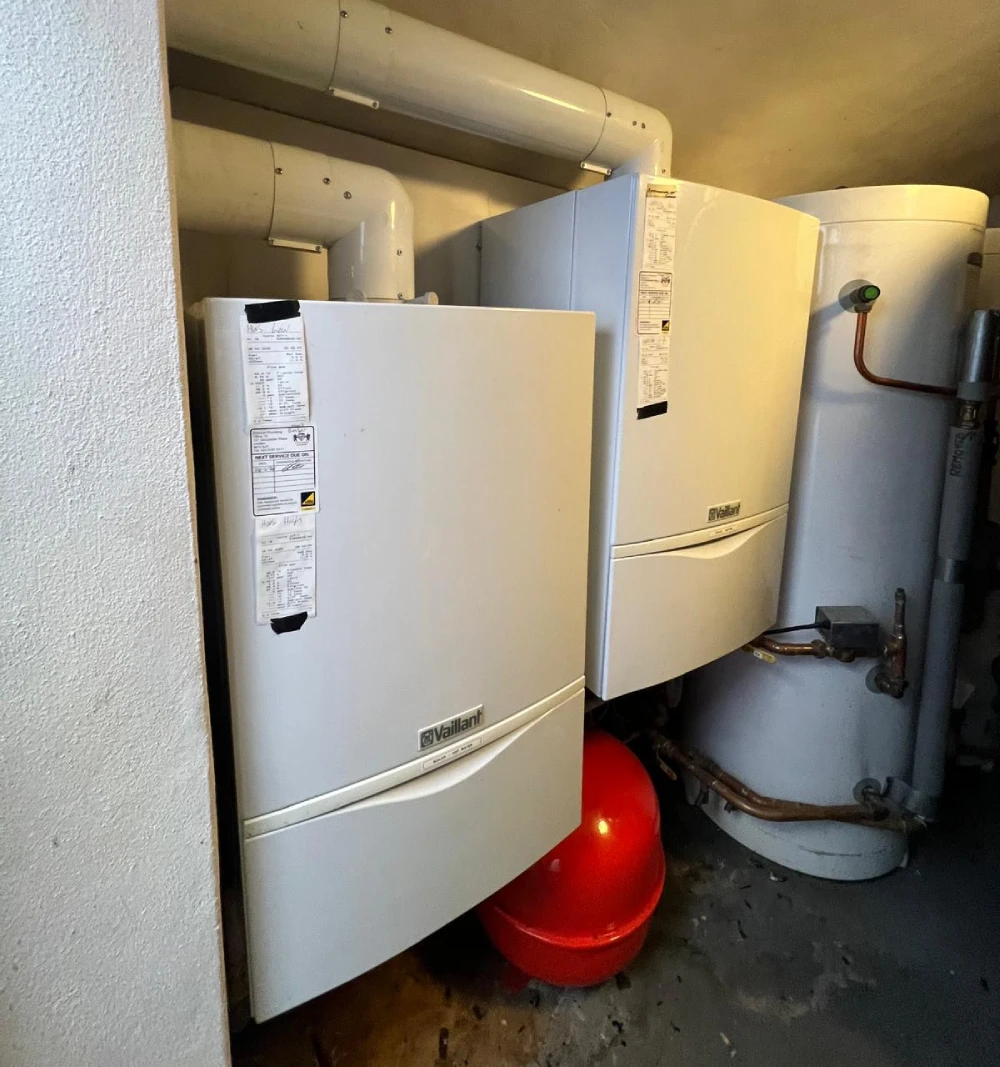
A system boiler works with a separate hot water cylinder but does not require a cold water storage tank. It takes water directly from the mains supply, ensuring strong water pressure.
Advantages:
Disadvantages:
3. Regular Boilers (Conventional or Heat-Only Boilers)
A regular boiler is also known as a conventional or heat-only boiler. It works with both a hot water cylinder and a cold water storage tank. These are typically found in older heating systems and larger properties.
Advantages:
Disadvantages:
Which Boiler is Right for You?
If you live in a smaller home or flat, then a combi boiler is probably the best choice due to its compact size and on-demand hot water. Combi boilers are ideal for a couple or small family who won’t usually run several taps or showers at the same time. And as the hot water is on-demand, energy is not wasted heating a whole tank of water.
For those who own a medium to large home with multiple bathrooms, a system boiler provides consistent hot water to multiple taps and showers. As larger families use more hot water throughout the day, system boilers are more cost effective to run.
Homes with traditional heating systems might benefit from a new regular boiler. This may be the best option if your property already has a cold water tank and hot water cylinder. Upgrading what is already available might be more cost-effective than completely changing the heating and hot water setup.
Final Thoughts About Boiler Types
Choosing the right boiler depends on your home’s size, hot water demand, and existing plumbing setup. At Portman, we can help you decide on the right boiler for your home and we provide no-obligation quotes so you know the costs upfront.
For expert advice and professional boiler installation, get in touch with our team today. We cover Hampstead, Kensington, Chelsea, Marylebone, Fulham and the surrounding areas – get in touch with us today.
Related articles


Let’s get started, Which fuel powers your boiler?
Mains Gas
LPG
At a glance
Let’s get started, Which fuel powers your boiler?
Mains Gas
LPG
It just takes 60 Seconds
And then you can book a free consultation
1. Combi Boilers
What is a Combi Boiler? A combi (combination) boiler is a compact, all-in-one unit that provides both central heating and hot water on demand without the need for a separate water tank or cylinder. With hot water on demand, there’s never a shortage at bathtime.
Advantages:
Disadvantages:
2. System Boilers
A system boiler works with a separate hot water cylinder but does not require a cold water storage tank. It takes water directly from the mains supply, ensuring strong water pressure.
Advantages:
Disadvantages:
3. Regular Boilers (Conventional or Heat-Only Boilers)
A regular boiler is also known as a conventional or heat-only boiler. It works with both a hot water cylinder and a cold water storage tank. These are typically found in older heating systems and larger properties.
Advantages:
Disadvantages:
Which Boiler is Right for You?
If you live in a smaller home or flat, then a combi boiler is probably the best choice due to its compact size and on-demand hot water. Combi boilers are ideal for a couple or small family who won’t usually run several taps or showers at the same time. And as the hot water is on-demand, energy is not wasted heating a whole tank of water.
For those who own a medium to large home with multiple bathrooms, a system boiler provides consistent hot water to multiple taps and showers. As larger families use more hot water throughout the day, system boilers are more cost effective to run.
Homes with traditional heating systems might benefit from a new regular boiler. This may be the best option if your property already has a cold water tank and hot water cylinder. Upgrading what is already available might be more cost-effective than completely changing the heating and hot water setup.
Final Thoughts About Boiler Types
Choosing the right boiler depends on your home’s size, hot water demand, and existing plumbing setup. At Portman, we can help you decide on the right boiler for your home and we provide no-obligation quotes so you know the costs upfront.
For expert advice and professional boiler installation, get in touch with our team today. We cover Hampstead, Kensington, Chelsea, Marylebone, Fulham and the surrounding areas – get in touch with us today.